- AI-generated phishing emails now get clicked over four times more often than human-written ones — your old "spot the bad grammar" training is obsolete.
- Voice cloning needs as little as 3–10 seconds of audio, and human listeners can no longer reliably tell it apart from the real thing.
- Five specific controls — not vague advice — close most of this gap for a typical Indian SMB.
Scammers are no longer sending poorly translated emails from far-off places. AI-generated phishing emails now achieve click-through rates more than four times higher than human-crafted scams, and an attacker can build a campaign as effective as 16 hours of human effort in five prompts and five minutes. If your SMB's defence is still "look for spelling mistakes," you've already lost.
Table of Contents
- What Makes AI Phishing Different From the Phishing You Already Train Against?
- How Are Indian SMBs Specifically Being Targeted?
- What Five Controls Actually Stop This?
- Key Takeaways
- Frequently Asked Questions
- How iTechFixr Can Help
What Makes AI Phishing Different From the Phishing You Already Train Against?
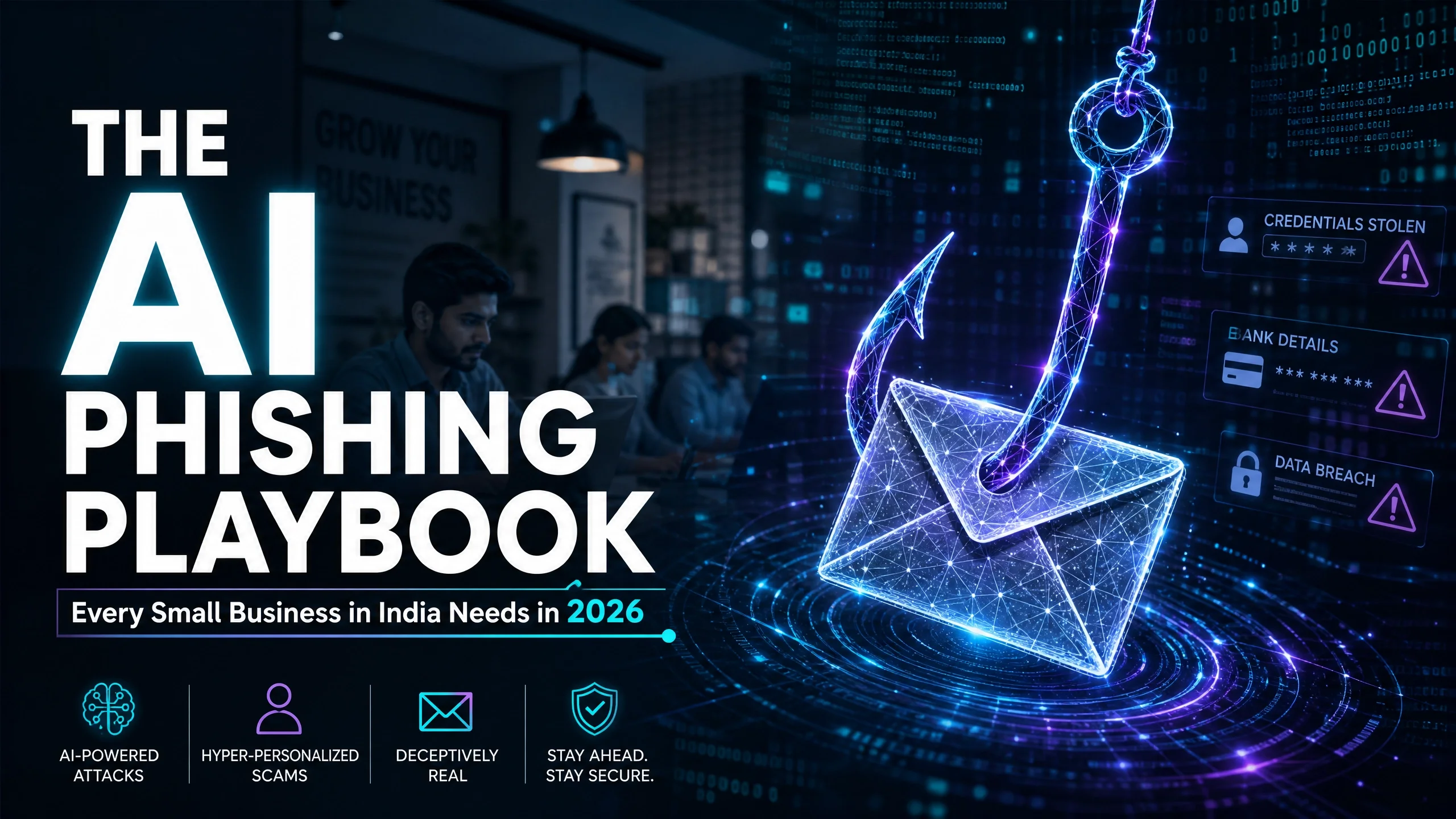
AI phishing uses large language models and voice cloning to remove every red flag your staff were trained to spot — bad grammar, generic greetings, mismatched tone — and replaces them with messages that read like they came from a real colleague who knows your business.
Attackers now scrape LinkedIn, your company website, and breached data dumps to learn who works where, what they're responsible for, and who they routinely talk to. That research, which used to take a human attacker days, is now automated in seconds. The result is a phishing email that references your actual vendor, your actual recent product launch, or your actual finance approval chain. Voice cloning takes this further: with three to ten seconds of clean audio — easily pulled from a YouTube talk, a webinar recording, or a LinkedIn video — an attacker can generate a voice call that sounds exactly like your CEO or IT manager. Voice phishing attempts surged 442% in 2025 on the back of this shift, and detection accuracy for high-quality cloned audio can drop as low as 24.5% — meaning your staff genuinely cannot trust their ears.
How Are Indian SMBs Specifically Being Targeted?
Small and mid-sized businesses are disproportionately targeted because vendor communication in SMBs follows predictable billing cycles, and a single convincing email or call to the right person can authorise a transfer with no second layer of verification.
This is exactly the pattern iTechFixr sees across client environments in Pimpri-Chinchwad and the wider Pune belt: a finance executive gets an "urgent" message — email or voice — referencing a real invoice number and a real vendor name, asking for a payment detail change or an expedited transfer. One documented global case saw a finance officer authorise a $25 million transfer after a deepfake video call impersonating the company's CFO. Indian SMBs don't need a number that large to be devastated — even a ₹5–10 lakh diversion can break a small business's quarter. The accounting and finance sector is especially exposed: one campaign targeting 800 accounting firms with AI-generated emails referencing specific state registration details achieved a 27% click rate, far above typical phishing benchmarks. If your business runs payments through a small finance team without a second-channel verification rule, you are this campaign's exact target profile.
What Five Controls Actually Stop This?
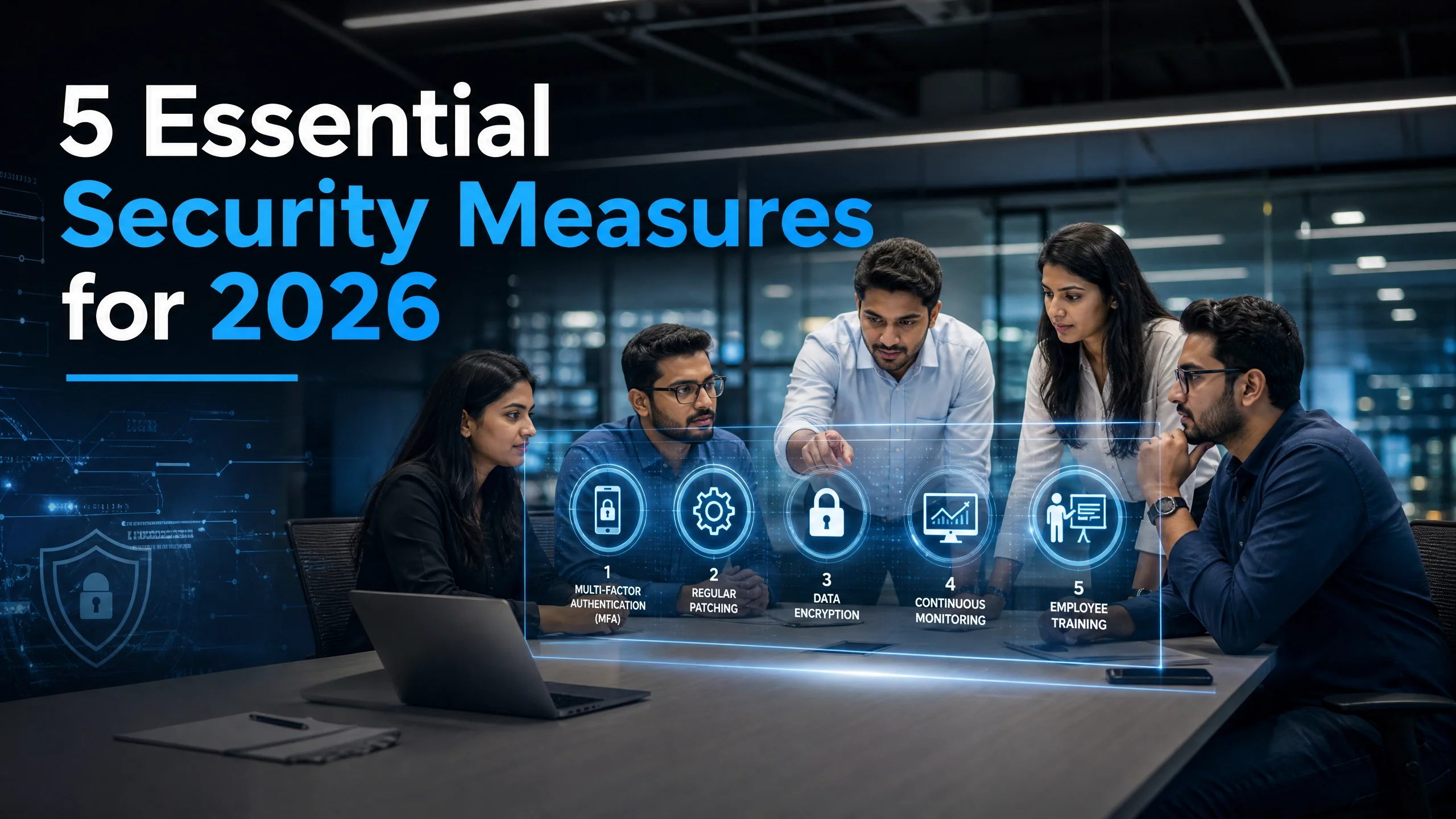
Layered, specific controls — not generic awareness training — close most of the AI phishing gap, and every one of them is something a small business can implement this month.
1. Out-of-band verification for every financial request. Any payment, vendor detail change, or urgent transfer request — by email, call, or video — must be confirmed through a separate, pre-agreed channel (a callback to a known number, not the one in the message) before action.
2. Phishing-resistant MFA on every finance and admin account. Hardware security keys (FIDO2) stop credential-based account takeover even when a password is compromised through a convincing AI lure.
3. A standing "urgent request" rule. Train staff that urgency itself is now the red flag, not poor writing. Any message demanding immediate, unverified action gets escalated, no exceptions — even from someone who "sounds exactly like" the boss.
4. AI-aware email filtering. Legacy filters trained on spelling errors and known bad domains miss AI-generated phishing entirely. If your filtering hasn't been updated in the last two to three years, it's not catching this category of attack.
5. A documented verification log for high-risk roles. Anyone with transfer authority should have a simple, written checklist they follow for every request above a set value — this also matters for cyber insurance, since many policies now exclude social-engineering losses unless verification controls were demonstrably in place.
Key Takeaways
- Stop training staff to "spot bad grammar" — AI-generated phishing has eliminated that tell entirely.
- Put an out-of-band verification rule in place for every financial request, regardless of who appears to be asking.
- Move finance and admin accounts to hardware-key MFA; password-only protection is no longer enough against AI-assisted credential theft.
- Review your cyber insurance policy now — many exclude social-engineering fraud unless you can prove verification controls were active.
Frequently Asked Questions
Q: Can my email filters catch AI-generated phishing on their own?
A: Not reliably. AI phishing removes the spelling, tone, and domain inconsistencies that legacy filters are trained to flag. You need AI-aware filtering combined with human verification steps — technology alone won't close this gap, and iTechFixr recommends treating it as a process fix, not just a tooling fix.
Q: How much audio does an attacker actually need to clone a voice convincingly?
A: As little as three to ten seconds of clean audio — a podcast clip, a conference talk, or a short LinkedIn video is enough. Anyone in a public-facing role at your company, especially leadership, should assume their voice is already a usable sample for an attacker.
Q: Is this really a risk for small businesses, or just large enterprises?
A: SMBs are arguably more exposed, not less. Predictable vendor billing cycles and thinner finance teams mean fewer checks per transaction. Hardik Patel, CEH-certified cybersecurity trainer at iTechFixr Infotech LLP, Pimpri-Chinchwad, has flagged this exact gap across multiple SME engagements this year.
How iTechFixr Can Help
Need help implementing these controls? We respond within 24 hours. iTechFixr can audit your current finance and approval workflows, identify exactly where an AI-driven impersonation attempt would succeed, and put the verification layer in place before an attacker finds the gap first.