💡 In Simple Terms (For Beginners)
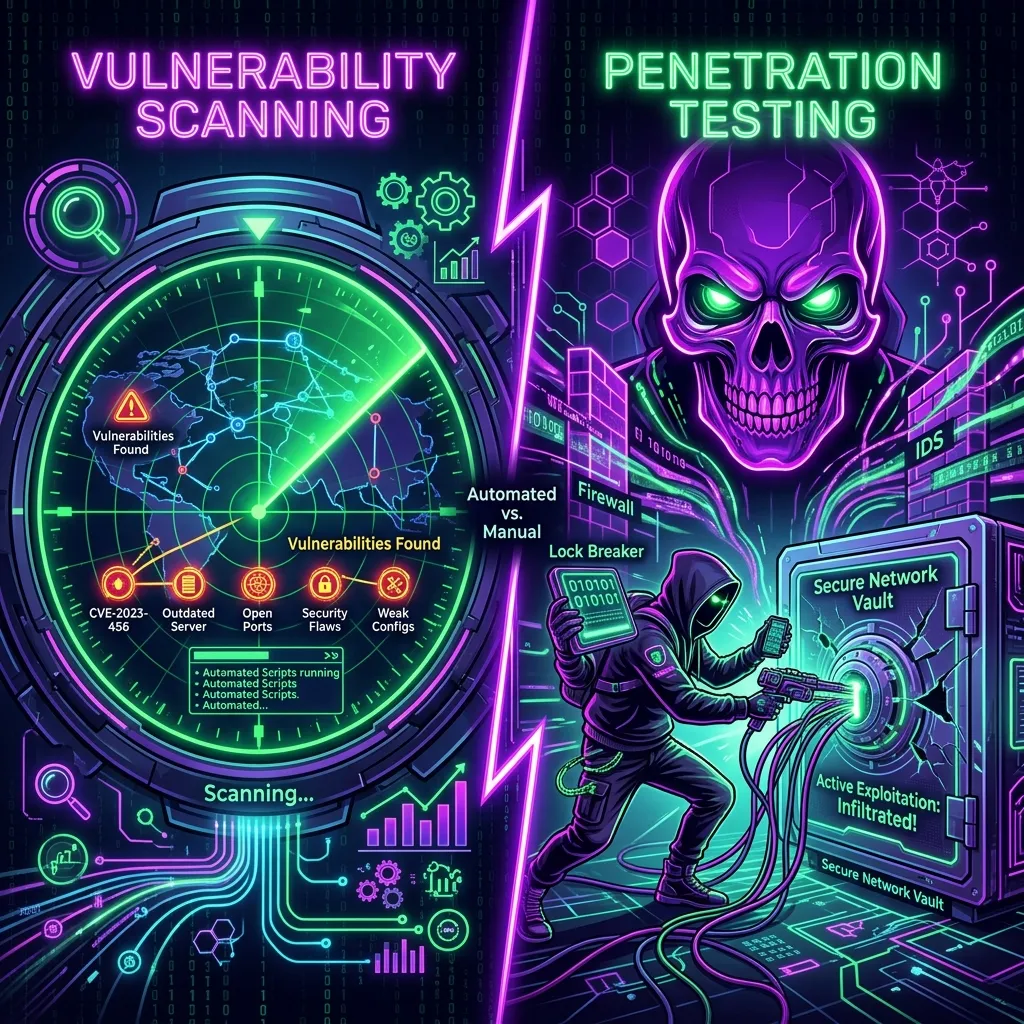
Vulnerability scanning is like an automated check to see if your office doors are locked. A VAPT audit is like hiring a professional lock-picker to actually try and break in so you know exactly where your security is weak.
- A vulnerability scan flags potential issues; VAPT manually verifies which ones are actually exploitable.
- Businesses handling payment or client data need VAPT, not just a recurring scan.
- Some vendors sell a repackaged scan as a "penetration test" — know the difference before you buy.
ETHICAL HACKING · August 13, 2026 · 7 min read · By Hardik Patel
These two terms get used interchangeably in sales conversations, but they're meaningfully different services — and buying the wrong one means paying for a report that doesn't answer the question you actually needed answered: can someone actually break in.
Table of Contents - What Vulnerability Scanning Is - What VAPT Adds - Which One Your Business Actually Needs - A Common Sales Trap to Watch For - Key Takeaways - Frequently Asked Questions - How iTechFixr Can Help
What Vulnerability Scanning Is
Vulnerability scanning is an automated check against a database of known issues — outdated software, missing patches, common misconfigurations — producing a list of potential problems quickly and at low cost.
It's a reasonable, fast baseline, but it has a structural limitation: automated tools flag anything that matches a known signature, without verifying whether that issue is actually reachable or exploitable in your specific environment. That distinction is where a real skills gap exists between scanning and testing.
What VAPT Adds
VAPT — Vulnerability Assessment and Penetration Testing — starts with the same automated scan, then adds a manual, human-driven attempt to actually exploit the findings, the way a real attacker would.
The practical difference comes down to this: a vulnerability scan tells you a door might be unlocked. A penetration test tells you whether someone can actually walk through it, and what they'd find on the other side. Automated scanning frequently produces false positives and misses issues that only emerge from chaining multiple small weaknesses together — which is exactly what a skilled attacker does and an automated tool doesn't replicate.
Which One Your Business Actually Needs
Businesses handling payment or client confidential data, or making security claims to clients, need VAPT specifically — automated scanning alone doesn't verify actual exploitability, which is the question that matters most for those businesses.
- If you need a quick baseline or a recurring compliance check, vulnerability scanning is a reasonable, cost-effective starting point.
- If you handle customer payment data, client confidential information, or are making a claim to clients about your security posture, VAPT is the more credible and more accurate answer — because it tests actual exploitability, not just theoretical exposure.
- If you've never had either done, start with VAPT once, then use lighter recurring scans to maintain a baseline between full assessments.
For the specific entry points VAPT is designed to catch before an attacker does, see our related ransomware prevention checklist.
A Common Sales Trap to Watch For
[Likely] Some vendors sell an automated scan report and call it a "penetration test" because the terms are unfamiliar to many buyers — a genuine VAPT engagement includes manual testing and a report showing what was actually exploited, not just a generated list of known vulnerabilities.
Hardik Patel, CEH-certified cybersecurity trainer and founder of iTechFixr Infotech LLP, Pimpri-Chinchwad, flags this mislabeling as one of the more common complaints he hears from business owners who've previously paid for a "penetration test" and received nothing more than an automated scan output with a cover letter attached.
Key Takeaways
- Vulnerability scanning identifies potential issues; VAPT manually confirms which ones are actually exploitable.
- Businesses handling sensitive data or making security claims to clients need VAPT specifically.
- A genuine VAPT report shows what was actually exploited, not just a generated vulnerability list.
- Starting with a full VAPT, then maintaining a baseline with lighter scans, is a practical middle path for most MSMEs.
Frequently Asked Questions
Q: Is vulnerability scanning enough for most small businesses?
A: It's a reasonable ongoing baseline, but if your business handles sensitive customer or payment data, or you're making security claims to clients, VAPT provides a materially more accurate picture of real exposure.
Q: How often should a business run a VAPT engagement?
A: [Guessing] Annually is a common baseline for most MSMEs, with additional testing after significant changes to your website, systems, or infrastructure.
Q: Can a vulnerability scan replace a real penetration test?
A: No — it identifies potential issues but doesn't verify whether they're actually exploitable, which is the core value a genuine penetration test provides.
Q: How can I tell if a vendor's "penetration test" is genuine?
A: Ask specifically whether the engagement includes manual exploitation attempts and a report detailing what was actually confirmed exploitable, not just a list of flagged vulnerabilities generated by a scanning tool.
How iTechFixr Can Help
Need a compliance-ready risk framework? Let's map your gaps together. iTechFixr helps businesses determine their exact obligation status and builds the detection-to-reporting pipeline needed to genuinely protect your operations.