Why Physical Security Still Matters in an All-Digital Threat Landscape
An unlocked server room or an unattended unlocked laptop can undo every technical control a business has invested in — physical access is still a real attack path.

💡 In Simple Terms (For Beginners)
All the firewalls and passwords in the world don't help if someone can just walk into your office and plug a device into an unattended, unlocked computer. Physical access to a device often bypasses digital security entirely.
- Physical access to a device can bypass many digital security controls entirely.
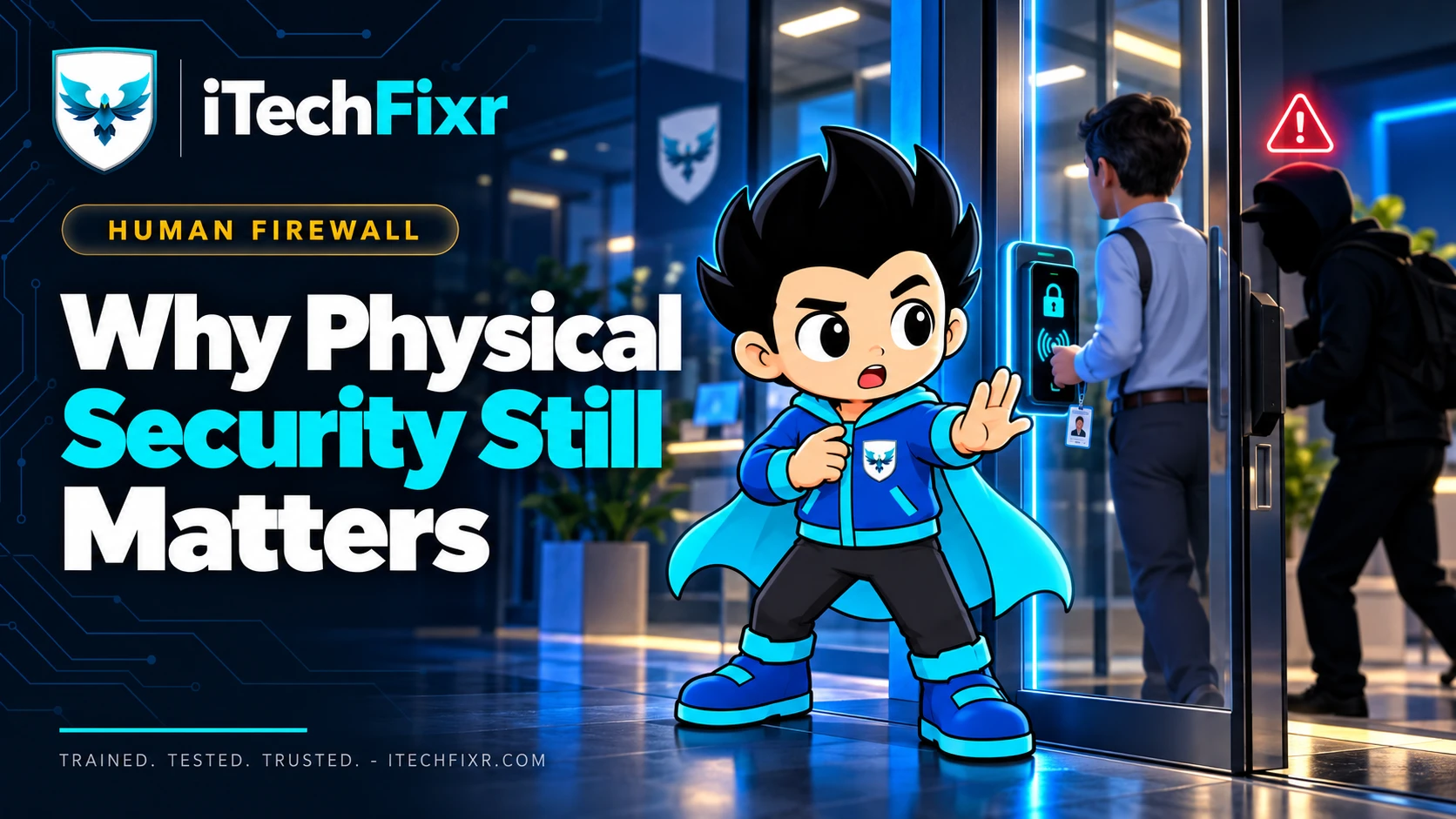
- Tailgating into a secured area is a well-documented, low-tech social engineering technique, not a rare occurrence.
- Screen locking and visitor management are the two most basic, most frequently skipped controls.
HUMAN FIREWALL · October 22, 2026 · 5 min read · By Hardik Patel
Why does physical security still matter in an all-digital threat landscape? Physical access to an unlocked device or server can bypass many technical security controls entirely — a strong password does very little if someone can simply sit down at an unattended, unlocked workstation.
Why Physical Access Defeats Digital Controls
Many digital security controls assume the attacker doesn't have physical possession of a device — an unlocked, unattended computer, an exposed USB port on a server, or an unsecured server room all create opportunities that bypass password protection, MFA, and network security entirely.
Tailgating: A Real, Low-Tech Technique
Tailgating means simply following an authorised employee through a secured door, relying on social norms against confronting a stranger rather than any technical exploit — it's a well-documented technique precisely because it requires no technical skill, only confidence and a plausible reason to be there.
A visitor policy that's inconsistently enforced — badges not checked, unfamiliar faces not questioned — is exactly the gap tailgating relies on.
Practical Controls
- Enforce automatic screen locking after a short idle period on every workstation.
- Require visible ID or a sign-in process for all visitors, and normalise politely questioning unfamiliar faces in secured areas.
- Physically secure server rooms and network equipment — locked doors, not just a closed one.
- Disable unused physical ports on devices in shared or accessible spaces where practical.
Key Takeaways
- Physical access can bypass password and network-level security entirely.
- Tailgating is a real, low-tech technique that exploits social norms, not technical weaknesses.
- Screen locking and visitor management are basic controls most businesses have not consistently enforced.
Frequently Asked Questions
Q: Is this really a priority compared to online threats like phishing?
A: Both matter, and physical security is often overlooked precisely because online threats get more attention — a comprehensive Human Firewall program covers both, not one at the expense of the other.
Q: Do small offices really need a formal visitor policy?
A: Yes, in a simplified form — even a small office benefits from a basic habit of acknowledging and verifying unfamiliar visitors rather than assuming anyone in the building belongs there.
How iTechFixr Can Help
Our Human Firewall training covers physical security awareness alongside digital threats, since a complete security culture addresses both.


Need Help With This?
Talk to Hardik directly about your organisation's cybersecurity needs — get a tailored response within 24 hours.
