How Should a Small Business Plan Its Cybersecurity Budget for Next Year?
A practical framework for allocating a realistic cybersecurity budget as an SME heads into Q4 planning — where the money should actually go first.

💡 In Simple Terms (For Beginners)
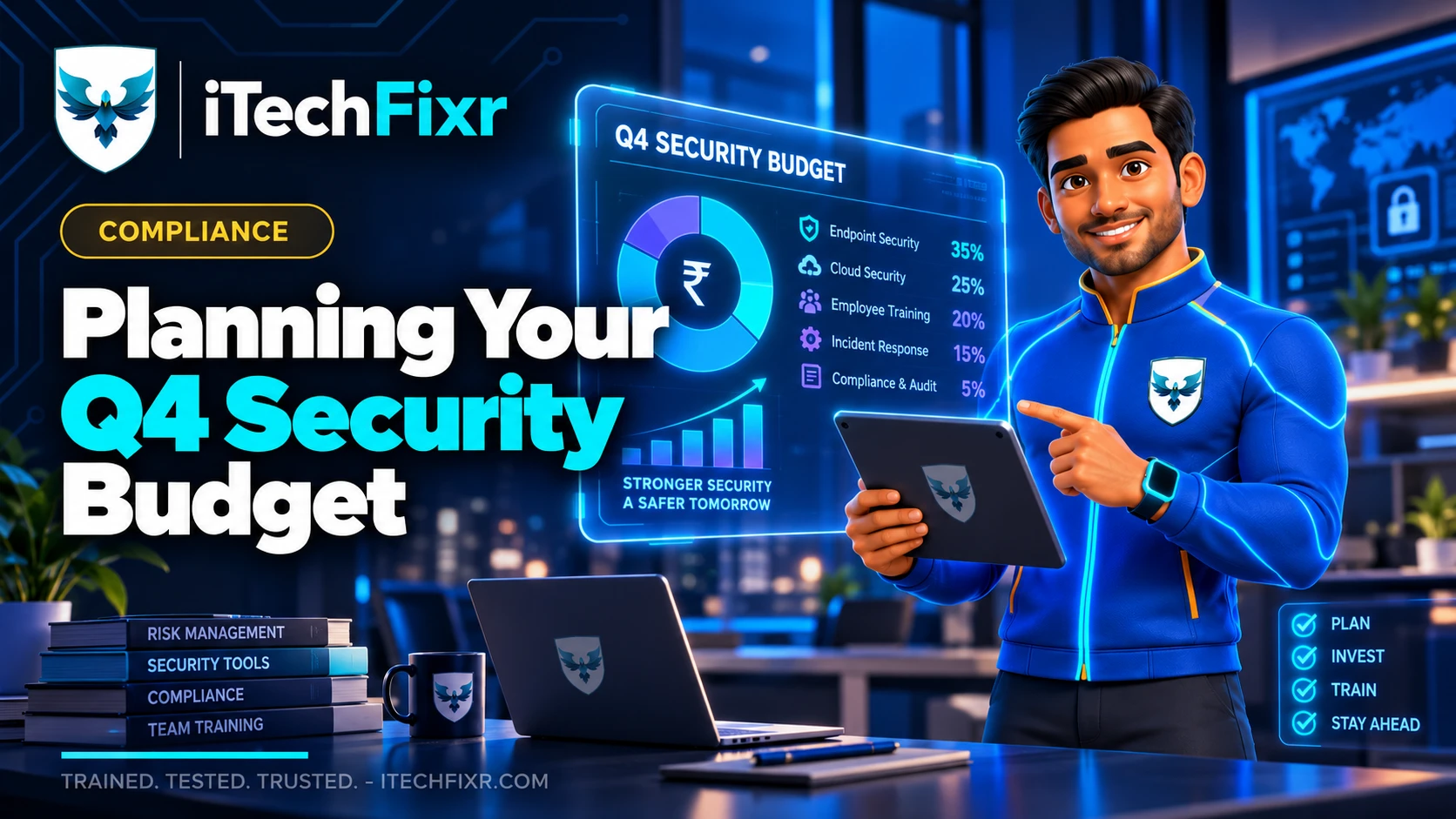
Planning next year's cybersecurity spending doesn't need a huge budget — the highest-impact spending usually goes toward things like a proper audit, employee training, and tested backups, before any expensive new tool.
- A security audit should come before new tool purchases — you can't prioritise spending without knowing your actual gaps.
- Employee training is consistently one of the highest-return line items relative to its cost.
- Budgeting for testing (backup restores, incident response drills), not just prevention tools, closes a common gap.
COMPLIANCE · October 30, 2026 · 6 min read · By Hardik Patel
How should a small business plan its cybersecurity budget for next year? Start with a security audit to identify actual gaps before allocating spend to specific tools, then prioritise employee training and tested backups — the highest-return line items for most SMEs — ahead of expensive new software.
Start With an Audit, Not a Tool List
A budget built around specific tools before understanding actual gaps risks spending on the wrong priorities — a VAPT audit identifies where your real exposure sits, which should drive the budget allocation, not the other way around.
Where the Highest-Return Spending Usually Goes
- A baseline security audit — establishes what actually needs fixing before any other spending decision.
- Employee training — consistently high-return relative to cost, since most incidents involve a human decision point somewhere in the chain.
- Tested backups — the difference between an untested backup job and a verified, restorable one is often a small budget line with outsized impact.
- MFA enforcement — usually low-cost or free, as covered in our MFA rollout guide, but frequently under-enforced.
Budgeting for Testing, Not Just Prevention
A common gap in security budgets is spending entirely on prevention tools while allocating nothing toward testing whether those tools and plans actually work — a backup restore test, an incident response tabletop exercise — the exact gaps most likely to surface only during a real incident.
Key Takeaways
- Start budget planning with an audit, not a tool wishlist.
- Employee training and tested backups are consistently high-return relative to cost.
- Budget for testing plans and backups, not just for prevention tools.
Frequently Asked Questions
Q: What should the very first line item in a security budget be?
A: A baseline security audit — it's what tells you where the rest of the budget should actually go, rather than guessing at priorities.
Q: Is employee training really worth budgeting for over new software?
A: For most SMEs, yes — since a large share of incidents involve a human decision point, training tends to deliver a strong return relative to its typically modest cost compared to enterprise software.
How iTechFixr Can Help
Our VAPT audits and Human Firewall training are exactly the kind of high-return, audit-first starting points this framework recommends — talk to us before finalising next year's budget.
Not sure where you stand? Check your DPDP readiness free (2 minutes).



Need Help With This?
Talk to Hardik directly about your organisation's cybersecurity needs — get a tailored response within 24 hours.
