Should a Business Ever Pay a Ransomware Ransom Demand?
Paying a ransomware demand is rarely straightforward — here's the practical and ethical reasoning businesses need to weigh before deciding.

💡 In Simple Terms (For Beginners)
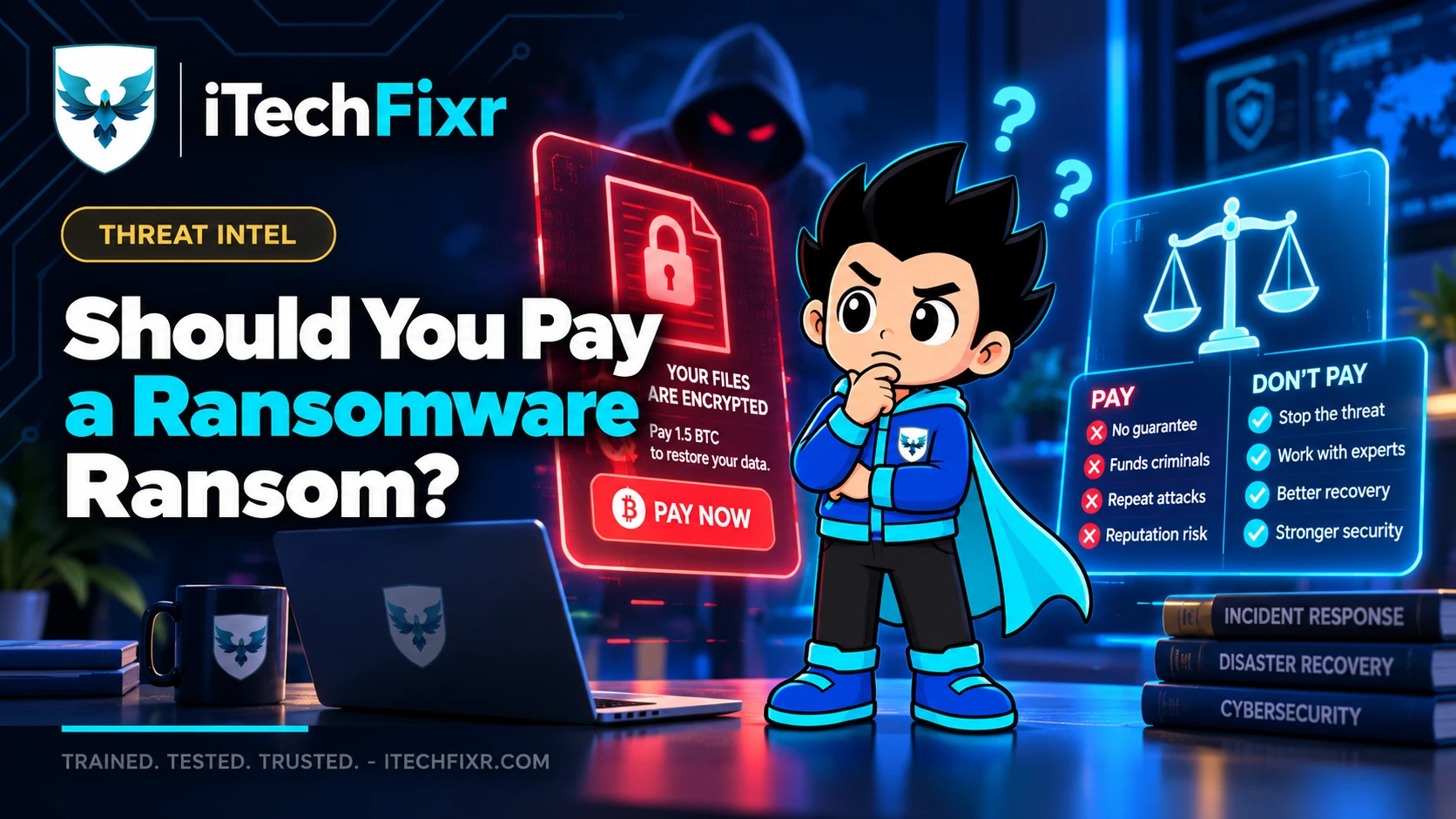
Paying a ransomware demand doesn't guarantee you get your data back, and it funds future attacks — but a business without working backups sometimes feels it has no other option. This decision needs legal and expert input, not a snap call.
- Payment doesn't guarantee data recovery — decryption tools provided by attackers sometimes fail or are incomplete.
- Paying funds further attacks against other victims, an ethical dimension beyond the immediate business decision.
- This decision should involve your incident response plan and legal counsel, not be made alone under pressure.
THREAT INTEL · October 28, 2026 · 6 min read · By Hardik Patel
Should a business ever pay a ransomware ransom demand? Generally, official guidance leans against paying, because payment doesn't guarantee data recovery and funds further attacks — but the decision is genuinely difficult for a business without working backups, and should always involve legal counsel, not be made alone under pressure.
Why Payment Doesn't Guarantee Recovery
Paying a ransom relies entirely on the attacker actually providing a working decryption method — there's no enforcement mechanism if they don't, and cases exist where paid victims received incomplete or non-functional decryption tools.
This is exactly why the prevention checklist's emphasis on tested, offline backups matters — the strongest position in a ransomware situation is not needing to make this decision at all.
The Broader Ethical Dimension
Paying a ransom doesn't just affect the paying business — it funds the same criminal operation to continue targeting other victims, which is part of why CERT-In and similar bodies generally advise against payment as standard guidance.
Why This Decision Shouldn't Be Made Alone
A ransomware payment decision involves legal considerations (payment legality can depend on who the attacker is), insurance implications, and law enforcement coordination — all reasons this needs to go through your incident response plan and legal counsel, not be decided unilaterally under pressure by whoever discovers the attack.
Key Takeaways
- Payment doesn't guarantee data recovery — decryption isn't enforceable.
- Paying funds further attacks against other victims, an ethical consideration beyond your own business.
- This decision needs legal counsel and your incident response plan, never a solo, under-pressure call.
- Tested offline backups are what actually remove the need to face this decision at all.
Frequently Asked Questions
Q: Is paying a ransom illegal in India?
A: The legality can depend on specifics like who the attacker is and applicable sanctions — this is exactly the kind of question that needs legal counsel before any payment decision, not a general assumption either way.
Q: What's the best way to avoid ever facing this decision?
A: Tested, offline, immutable backups — a business that can restore from a clean backup removes the core leverage a ransomware attacker relies on.
How iTechFixr Can Help
Our incident response planning and ransomware prevention work are built specifically to reduce the odds a business ever has to face this decision in the first place.
Need Help With This?
Talk to Hardik directly about your organisation's cybersecurity needs — get a tailored response within 24 hours.
